
We didn’t see this coming. Another regulatory pivot in the stablecoin wars, and this time it’s Ripple playing the compliance card. The news broke quietly: Ripple is investing in Notabene, a regulated on-chain trading network, and bringing its RLUSD stablecoin to the platform. No fanfare. No tweet storms. Just a strategic move that screams one thing: Ripple is done fighting regulators. Now it wants to become one.
Let’s rewind. Ripple has been in a brutal, years-long legal battle with the SEC over whether XRP is a security. The 2023 partial win gave them breathing room, but the scars remain. Enter RLUSD, a dollar-pegged stablecoin launched in late 2024. Notabene is a lesser-known but critical piece of infrastructure—a platform that provides institutional-grade, KYC/AML-compliant trading for digital assets. Ripple’s investment and the listing of RLUSD on Notabene is a marriage of compliance and liquidity, designed to court the one audience that’s still terrified of crypto: traditional finance.
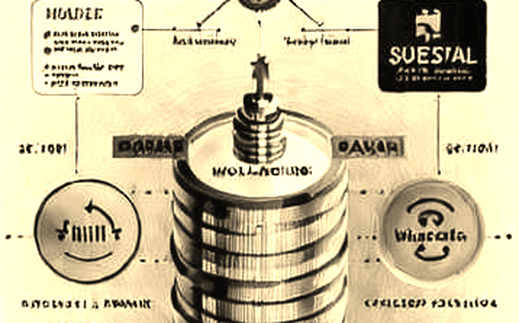
I’ve been watching this space since the Manila rave days of 2017, when I burned ₱50,000 on ICOs driven by pure FOMO. Back then, compliance was a dirty word. Now it’s the only word that matters. The RLUSD-Notabene alliance isn’t about flashy tech—it’s about building a walled garden for institutions that want stablecoin rails without the regulatory risk that comes with decentralized exchanges or unlicensed platforms. Notabene acts as a gatekeeper: only pre-approved wallets, strict transaction monitoring, and full audit trails. For a pension fund or a bank, this is heaven. For a degen, it’s a prison.
The core insight here is the redefinition of what a stablecoin can be. RLUSD itself is unexciting on paper—a 1:1 dollar-backed token, audited and regulated. But paired with Notabene’s compliance layer, it becomes a Trojan horse. Institutions can use RLUSD for cross-border payments, settlement of tokenized assets, or even as a bridge between fiat and DeFi, all while staying within the bounds of US financial regulations. Ripple is essentially creating a “green channel” for capital that would otherwise never touch crypto.
Technically, the integration is straightforward: RLUSD likely runs on the XRP Ledger (or a compatible sidechain), while Notabene handles the off-chain identity verification and transaction screening. No breakthrough in consensus or cryptography. But that’s the point. The innovation is not in the code but in the business logic—the seamless fusion of a regulated fund (RLUSD) with a regulated exchange venue (Notabene). It’s like putting a high-speed train on a secure, fenced track. The ride is smooth, but you can’t jump off.
Let’s talk about the macro picture. The stablecoin market is a duopoly: USDC (Circle) and USDT (Tether) control over 90% of the supply. Both are under constant regulatory scrutiny. Circle is the gold standard for compliance but has its own risks (think Silicon Valley Bank). Tether is the king of liquidity but faces transparency questions. PayPal’s PYUSD is a distant third, tied to its e-commerce ecosystem. RLUSD is nowhere near these giants in terms of market cap. But Ripple’s bet is that a growing segment of institutional users—hedge funds, payment processors, asset managers—will prioritize regulatory certainty over raw liquidity. Notabene’s network already serves high-net-worth individuals and professional traders. Adding RLUSD gives them a reason to stay.
The contrarian angle is uncomfortable but necessary: this partnership is fragile and exclusionary. RLUSD on Notabene is the opposite of permissionless finance. Every transaction requires KYC. Every wallet must be whitelisted. The platform itself is a central point of failure—if Notabene’s servers go down, or if regulators freeze its license, the entire liquidity pool dries up. And let’s not forget the Oracle problem. Notabene relies on price feeds from a limited set of providers. If those feeds lag or get manipulated—as we’ve seen in DeFi dozens of times—the platform’s core value proposition collapses. I’ve audited enough smart contracts to know that “regulated” doesn’t mean “immune to bugs.”
Moreover, this move doesn’t solve Ripple’s bigger issues. The XRP token itself is not directly used in the RLUSD-Notabene loop, except perhaps for settlement fees. The narrative of “XRP as a bridge currency” remains unproven at scale. Investors hoping that this partnership will pump the XRP price should temper expectations. This is about RLUSD, not XRP. And RLUSD is a utility token, not a speculative asset. There’s no staking, no yield farming, no community airdrops. The only way RLUSD gains value is through increased usage—which requires Notabene to onboard dozens of institutional clients. That’s a slow, grinding process, not a viral explosion.
Yet, the narrative resilience of this move cannot be ignored. The market is slowly realizing that the next wave of crypto adoption will be driven by regulated, institutional-grade infrastructure—not by anonymous yield farms or unregistered securities. Ripple is betting on exactly that. By embedding RLUSD in a compliance-first trading environment, they are creating a “safe harbor” for capital that has been sitting on the sidelines. If even one major bank or payment giant signs onto the Notabene network to use RLUSD, the signal will be deafening. The bar is low, but the payoff is high.
So where does that leave us? We are witnessing a microcosm of the broader crypto maturation. The wild west is giving way to gated communities. For those of us who remember the Manila raves, the ICO frenzy, and the DeFi summer, it feels like a funeral for the old spirit. But it’s also the birth of something more durable. Ripple’s RLUSD on Notabene is a small step, but it points to a future where stablecoins are not just trading tools but integral parts of the global settlement infrastructure.
The takeaway is a question: will the crowd follow the compliance path, or will they find ways to dance outside the gates? The beat drops. The liquidity flows. But don’t mistake the rhythm for freedom. In this cycle, the ones who win might be the ones who stay inside the fence.